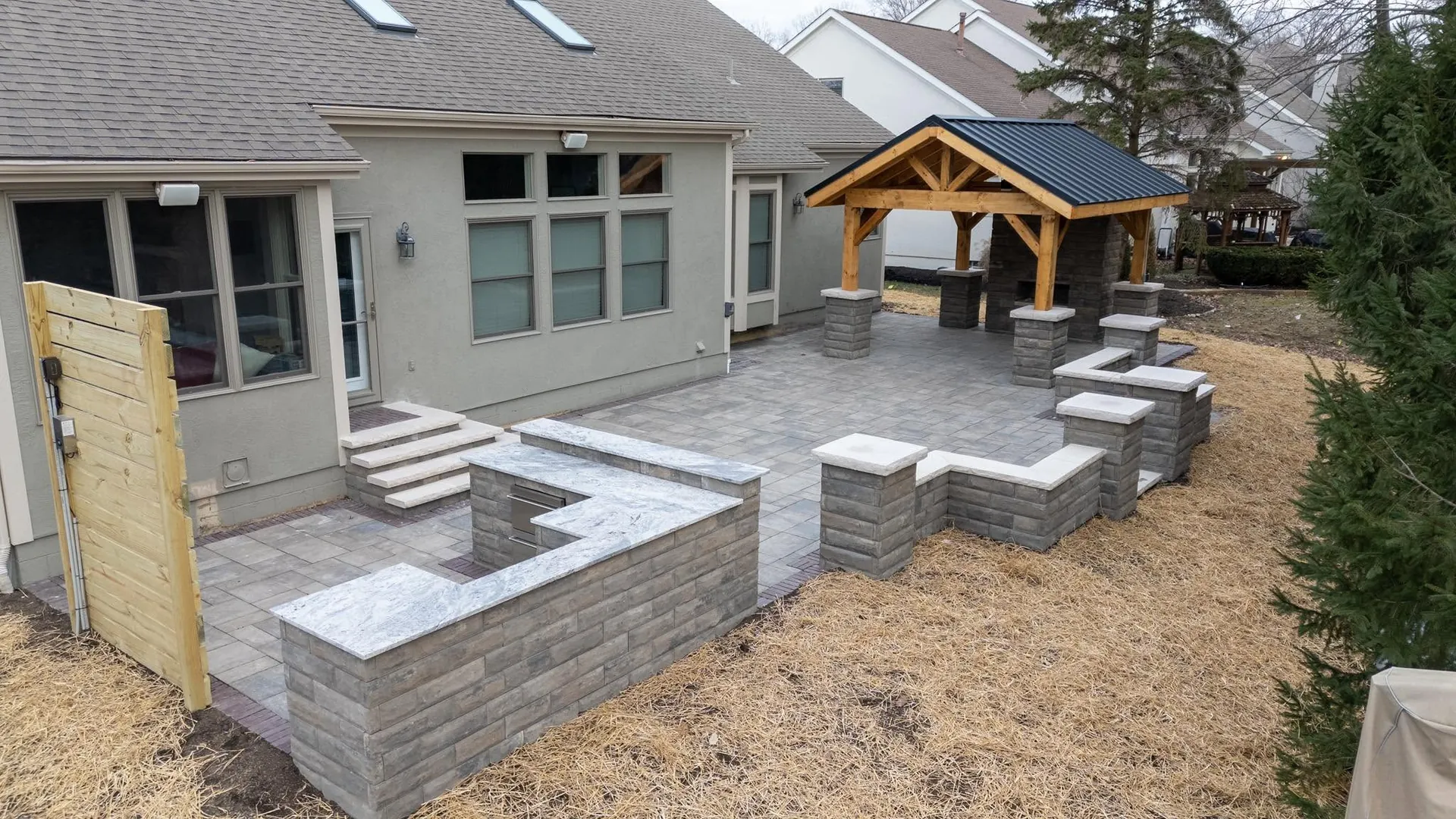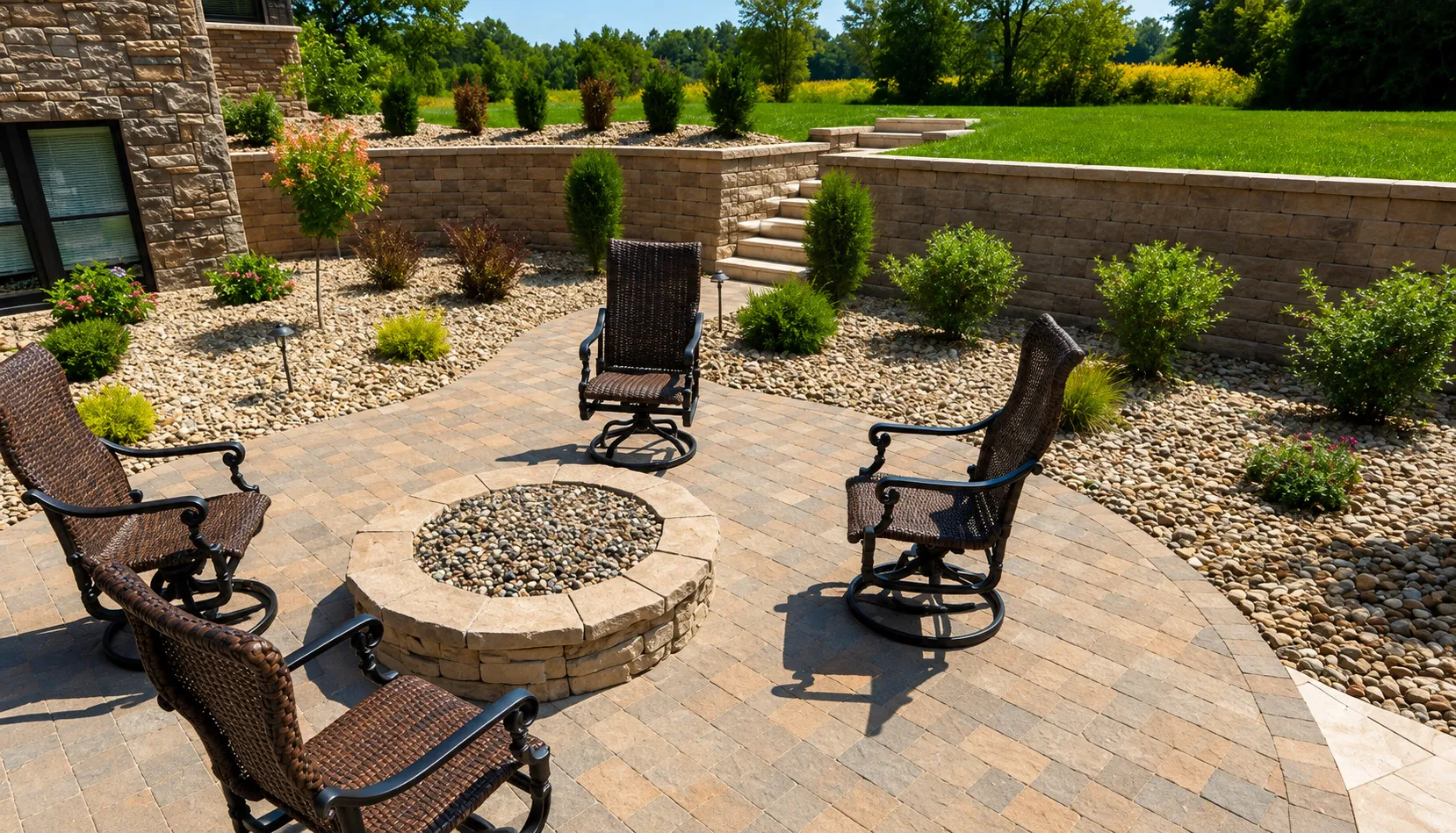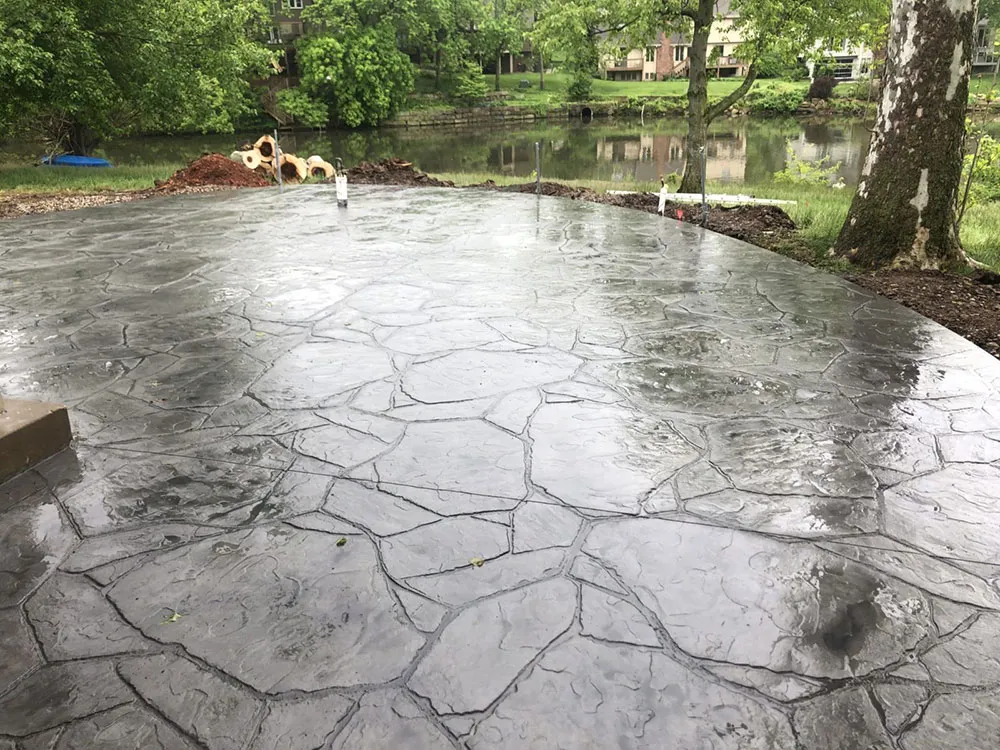
Both look great on day one. Here’s how they actually age in an Ohio climate.
Stamped concrete and pavers are the two most popular ways to build a patio, walkway, or driveway in Central Ohio. Both can look beautiful. The real difference shows up over years of freeze-thaw cycles, so it’s worth understanding how each behaves before you choose.
Freeze-thaw durability
This is the big one in Ohio. Stamped concrete is a single, continuous slab, so when the ground moves — and clay soil moves a lot — the slab can crack. Good installation with proper control joints minimizes it, but concrete will always crack somewhere eventually. Pavers are individual units with sand-filled joints, so they flex with the ground instead of cracking, and any settling can be re-leveled.
Repairs
- Pavers: if one is stained or damaged, you lift it and swap in a new one — the repair is nearly invisible.
- Stamped concrete: a crack or spall usually means patching a section that rarely matches, or replacing the slab.
Cost
Stamped concrete is often a bit less expensive up front than a comparable paver install. Over a 15–20 year horizon, though, the math frequently evens out or favors pavers once you account for crack repair and resealing.
Maintenance
Stamped concrete needs to be resealed every 2–3 years to keep its color and water resistance. Pavers need very little — an occasional joint-sand top-up and the option to reseal for color. Neither is high-maintenance, but stamped concrete asks for more attention over time.
So which should you choose?
Stamped concrete makes sense when you want a specific poured look, a seamless surface, or a lower up-front price. Pavers make sense when you want maximum freeze-thaw resilience, easy repairs, and the longest service life. We install both and will give you a straight recommendation for your specific site — not a one-size-fits-all pitch.