Standing water is more than an eyesore — in clay soil it’s a threat to your foundation and hardscape.
Central Ohio’s clay soil drains slowly, so water that isn’t actively directed away from your home tends to sit. Left alone, poor drainage undermines patios, floods basements, and kills plantings. The good news: the warning signs are easy to spot once you know what to look for.
The warning signs
- Water that pools in the yard for hours or days after rain
- A soggy, spongy lawn that never quite dries out
- Water stains, dampness, or a musty smell in the basement
- Mulch and soil washing out of beds after storms
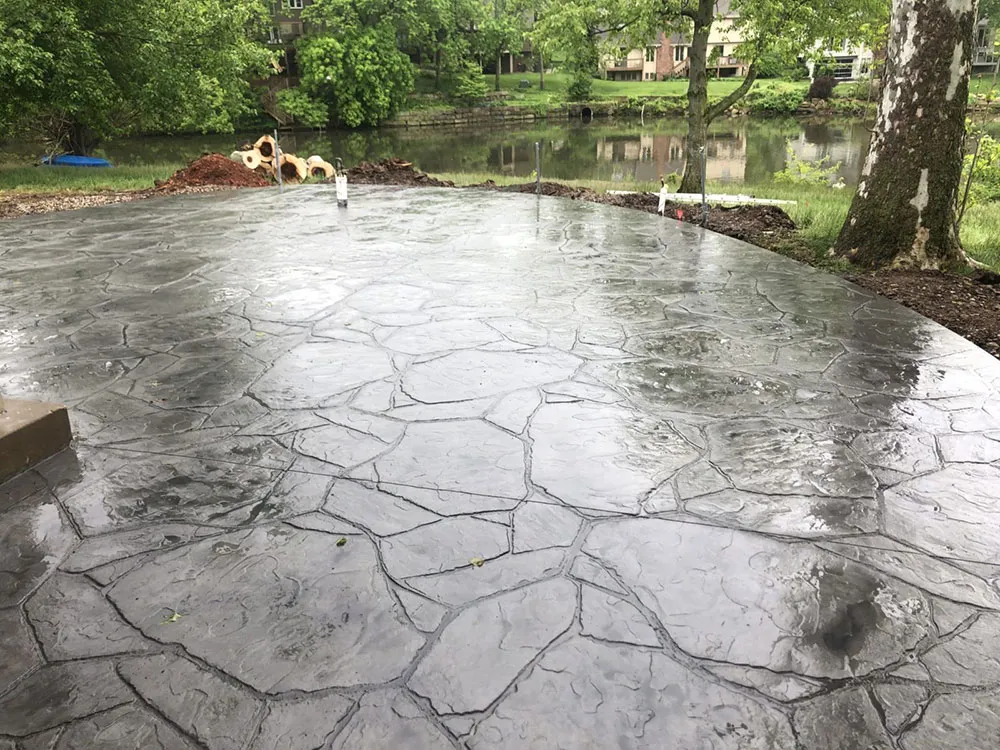
- Cracking or settling in patios, walkways, or driveways
- Foundation cracks or water pooling against the house
Any one of these on its own may be minor. Two or three together usually means water is moving the wrong way across your property.
Why it matters more here
In sandy soil, water percolates down. In Central Ohio’s clay, it moves sideways — often straight toward the lowest point, which is frequently your foundation or the base under a patio. Combined with freeze-thaw cycles, trapped water is the single most common cause of hardscape failure we see.
The fixes that actually work
- Grading: re-shaping the soil so water flows away from the house is the foundation of every drainage fix
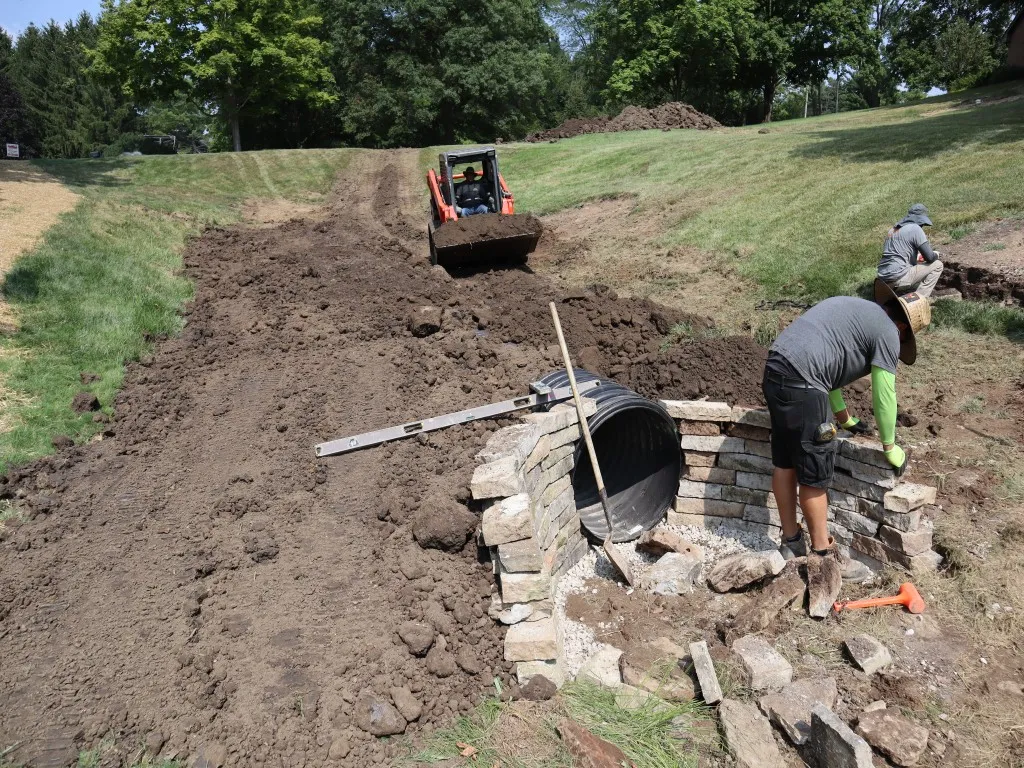
- French drains: a gravel-and-pipe channel that intercepts and reroutes subsurface water
- Dry wells: an underground reservoir that collects runoff and lets it disperse slowly
- Downspout extensions and catch basins: moving roof water well away from the foundation
The right solution depends on where the water is coming from and where it needs to go — which is why drainage work starts with actually watching how your property sheds water. If you’re seeing any of the signs above, a free on-site assessment is the place to start.